












Automotive Wire Cone Take-Up Line Solution: Active Pay-Off + Spark Testing + Laser Diameter Measurement + Length Counting + Servo-Controlled Take-Up
In automotive wire manufacturing, fine-wire take-up operations often face several common challenges: passive pay-off systems can cause tension fluctuations, potentially stretching fine conductors; insulation damage may only be detected through offline sampling inspections; out-of-tolerance wire diameters cannot be intercepted in real time; measuring accuracy can be affected by slippage during take-up; and inspection data is often disconnected from winding records, making product traceability difficult.
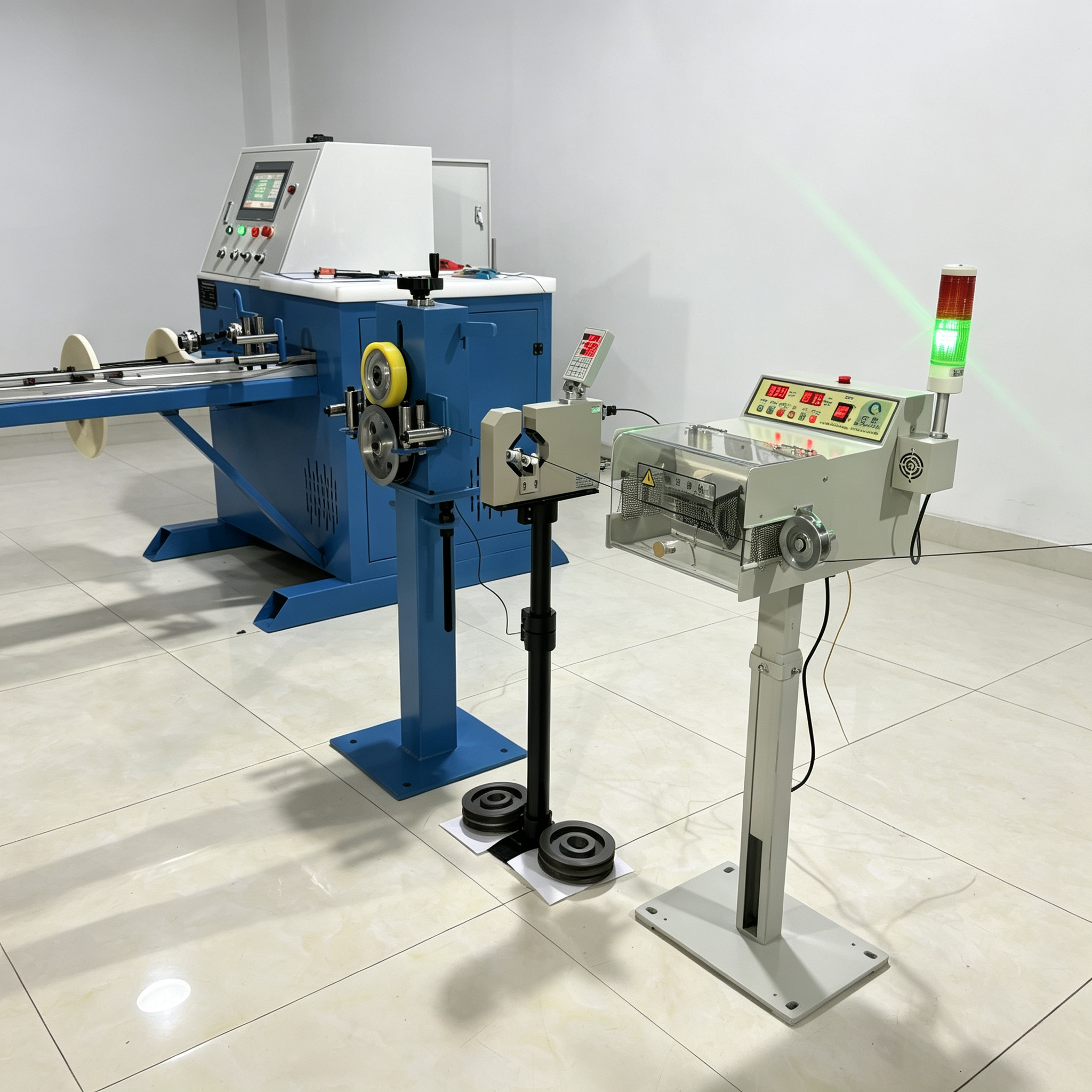
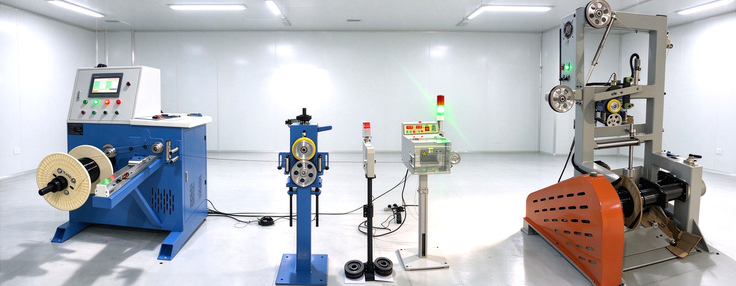
To address these challenges, we delivered a complete automotive wire cone take-up line solution built around an active pay-off machine, integrating a spark tester, laser diameter gauge, length counter, and servo-controlled take-up machine. The entire system enables coordinated control throughout the production process, from wire pay-off and online quality inspection to precision length measurement and final take-up, ensuring stable operation, improved product quality, and enhanced production traceability.
Key Takeaway
This integrated production line combines active **pay off machine**, **spark tester**, **laser diameter gauge**, **meter counter**, and servo **take up machine** for cone‑disc winding of automotive fine wire. Constant‑tension unwinding prevents thin wire elongation. Multi‑unit linkage delivers real‑time defect detection, OD supervision, preset‑length alarming, and full alarm log storage. Operators can switch between cone‑disc and flat‑spool winding programs directly via HMI without major mechanical modification.
Why Automotive Cable Requires This Matched Take‑up & Pay‑off Machine
Automotive wiring demands extremely strict consistency for conductor geometry, insulation integrity, outer dimension, and batch‑level traceability. Conventional separate unwinding, testing and take‑up equipment creates gaps between stations.
Fine automotive wire is highly vulnerable to tension fluctuations. Passive unwinding racks often pull and stretch conductors, changing electrical performance. Insulation pinholes or micro‑breaks may go unseen without inline testing. Outer‑dimension drift can accumulate many meters of non‑conforming product before manual discovery. Manual length logging and scattered alarm records make automotive‑grade traceability difficult.
When unwinding, inspection, measuring and winding operate as disconnected stations, operators spend extra time cross‑checking data and handling defective segments. Our coordinated system addresses those gaps by linking every critical unit for automotive cable processing.
How the Integrated Cone‑Disc Wire Reeling Line Works
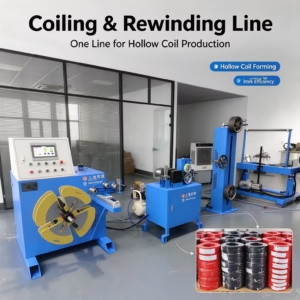
Material starts from the supply spool loaded onto the active pay off machine. Wire passes sequentially through spark tester, laser diameter gauge, meter counter, before final collection on the servo take up machine. All units communicate through PLC control.
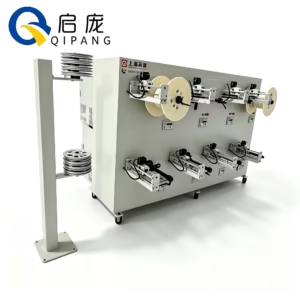
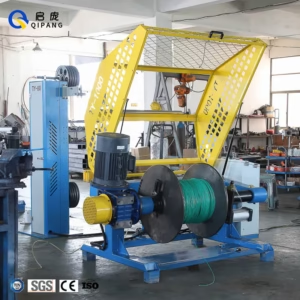
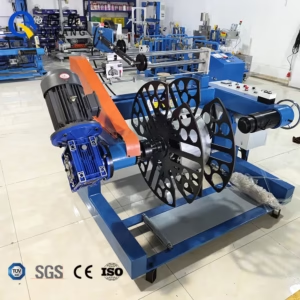
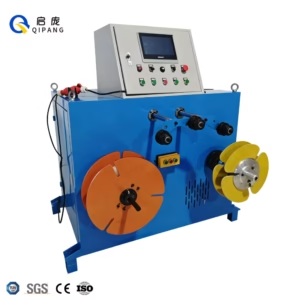
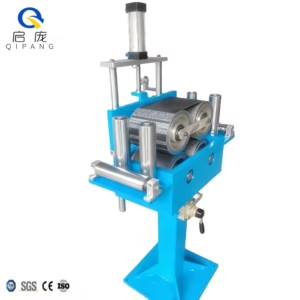
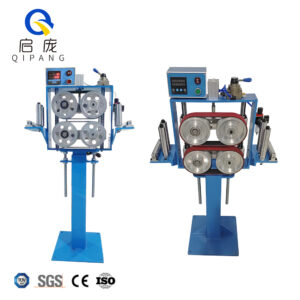
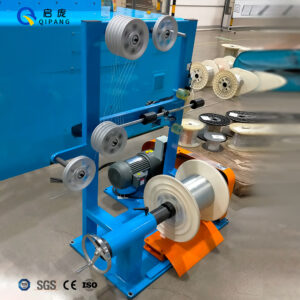
Active pay off machine: It delivers closed‑loop tension follow‑up control matched for thin automotive wire. The pay‑off speed synchronizes with downstream take‑up speed, avoiding over‑pulling and fine‑wire stretching during acceleration, deceleration or running at steady speed. Stable tension protects conductor cross‑section and keeps mechanical properties within specification.
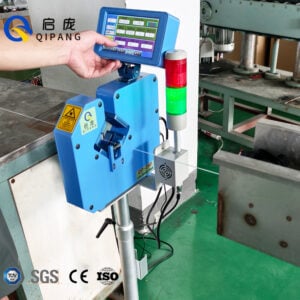
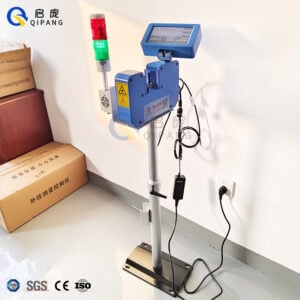
Spark tester: Continuous inline insulation integrity inspection runs while wire travels. It identifies insulation rupture, pinholes and bare‑copper exposure. Once defects are captured, alarm signals are sent to the whole‑line control system for fast operator response.
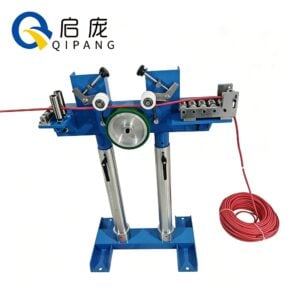
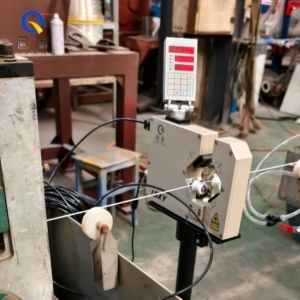
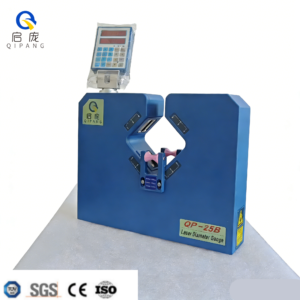
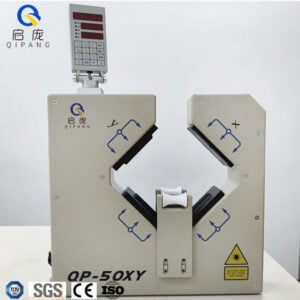
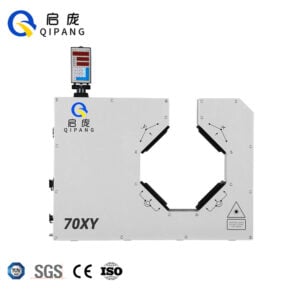
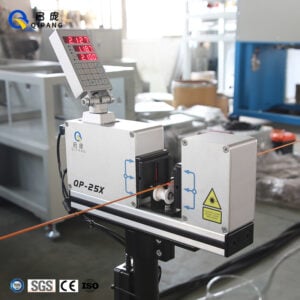
Laser diameter gauge: Non‑contact real‑time outer‑diameter measurement monitors running automotive cable. When measured OD exceeds pre‑configured upper or lower tolerance thresholds, an over‑tolerance alarm triggers. Production staff can adjust upstream extrusion or drawing parameters promptly to limit scrap output.
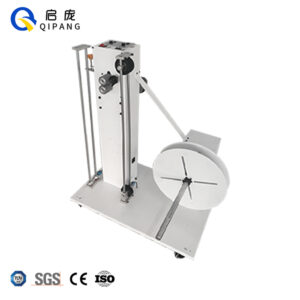
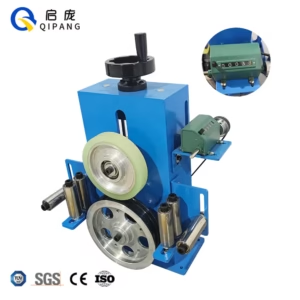
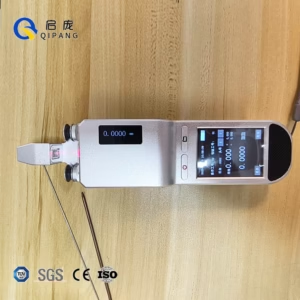
Meter counter: Performs high‑precision cable length measuring. Operators input target coil length according to production orders. When accumulated length hits the preset value, the unit generates target‑reached alarm signals. Length‑based stopping assists batch sorting, spool grouping and finished‑goods delivery. Measuring reliability depends on proper calibration and stable wire feeding status.
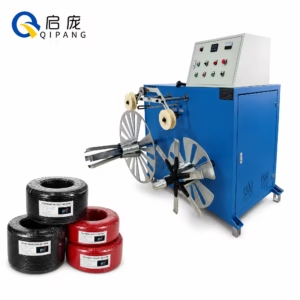
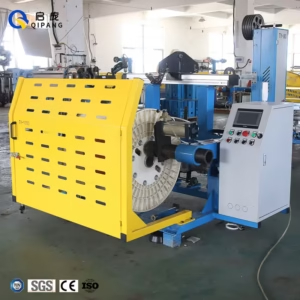
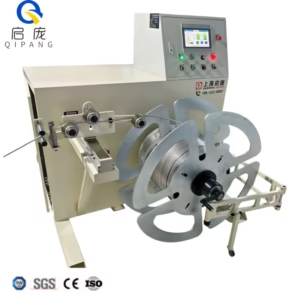
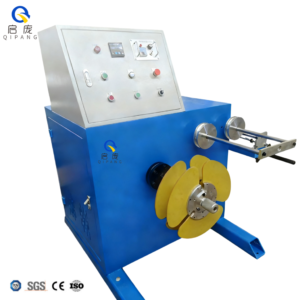
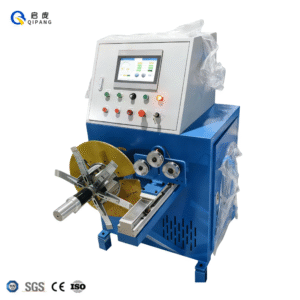
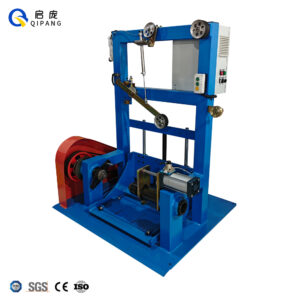
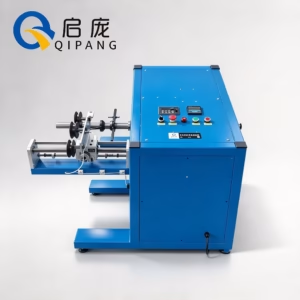
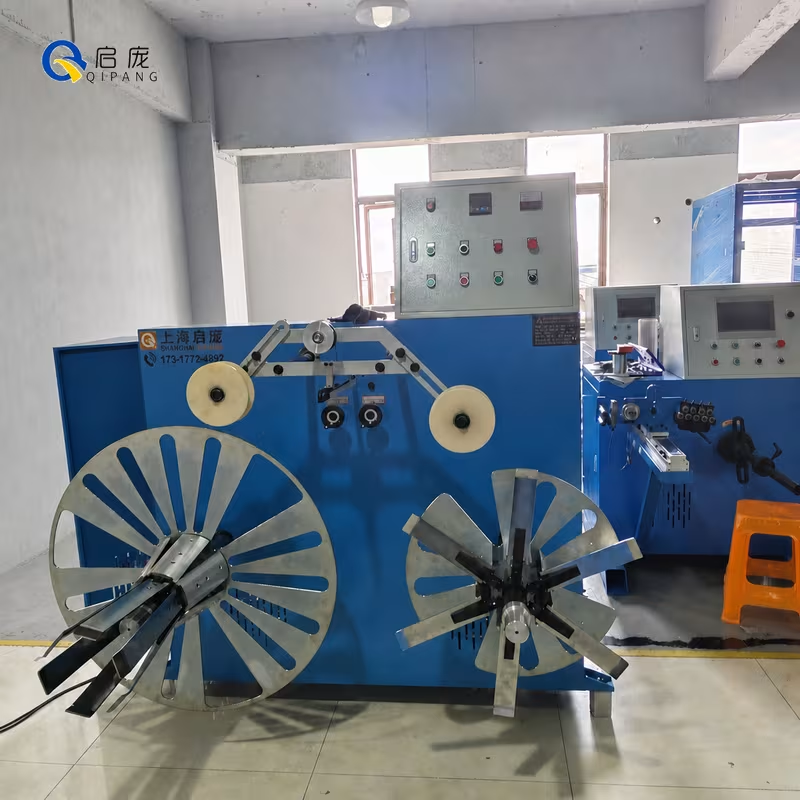
Servo take up machine (wire reeling machine): Acts as the core collection unit for cone‑disc winding. It maintains full‑signal linkage with pay off machine, spark tester, laser diameter gauge and meter counter. Alarms including spark insulation failure, diameter out‑of‑tolerance and preset‑length arrival are automatically captured, displayed and stored in HMI history logs for quality traceability.
Program switching supports two winding formats: cone‑disc take‑up mode and flat‑spool take‑up mode. Production change‑over between cone coils and flat reels can be completed through touch‑screen parameter adjustment instead of heavy mechanical rebuilds. Operator workload reduces for mixed‑spec automotive wire orders.
Cone‑Disc Take‑up vs Flat‑Spool Take‑up for Automotive Wire
Cone‑disc winding and flat‑spool winding serve different downstream requirements for automotive cable.
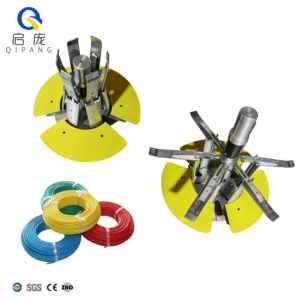
Cone‑disc take‑up: Produces tapered cone coils widely used for subsequent automotive‑wire secondary processing. The coil geometry requires matched tension and traverse settings to avoid overlapping or loose layers.
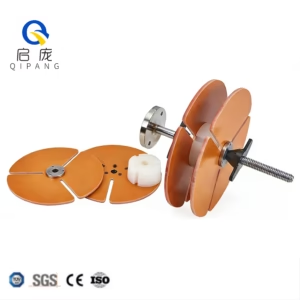
Flat‑spool take‑up: Winds finished wire onto standard parallel flanged reels, convenient for storage, transportation and direct feeding into next‑stage machinery.
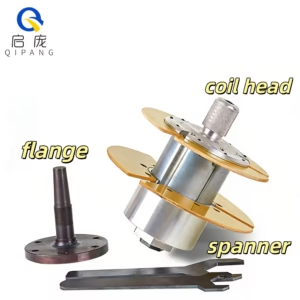
The same servo take up machine supports both working modes by activating different internal programs. Tooling change may still be needed for spool dimension differences. Minimum bend radius of thin automotive wire must always be respected during winding parameter setup.
Where Efficiency & Quality Improvements Originate
Performance gains are not limited to winding speed alone. Even fast winding brings limited benefit if quality defects are only discovered after full coils are completed.
Prevent fine‑wire stretching: Closed‑loop tension from active pay off machine minimizes conductor deformation, lowering reject rates caused by tension damage.
Inline quality capture: spark tester and laser diameter gauge spot defects during production rather than after batches are finished. Defective sections can be marked and isolated early.
Reliable cable length measuring: The meter counter removes error‑prone manual length counting and supports consistent finished‑coil specifications.
Centralized alarm history: All alarm events are saved within the wire reeling machine HMI. Records support quality audits required by automotive supply‑chain standards.
Flexible job change‑over: Quick program toggle between cone‑disc and flat‑spool winding cuts downtime when switching different automotive‑wire part numbers.
表格
| Production task | Disconnected separate equipment | Integrated cone‑disc wire reeling solution |
|---|---|---|
| Wire tension control | Risk of stretching thin automotive wire | Active pay‑off closed‑loop tension control |
| Insulation defect detection | Post‑production batch inspection | Real‑time spark‑tester inline alarming |
| Outer diameter supervision | Periodic manual sampling | Continuous laser diameter‑gauge monitoring |
| Cable length measuring | Manual measurement or separate counter | Linked meter counter with target‑length alarm |
| Winding format switch | Mechanical rework for cone / flat‑spool change | Program‑based mode selection on HMI |
| Quality event records | Scattered manual note‑taking | Automatic stored alarm logs for traceability |
What Determines Actual Line Performance
Original supply‑reel weight and dimension set capacity requirements for the pay off machine. Automotive wire conductor size, insulation material, stiffness, and maximum permitted tension all influence feeding stability.
User‑defined tolerance windows for the laser diameter gauge, target length values in the meter counter, and spark‑test voltage settings for the spark tester need correct configuration according to each cable part number.
Change‑overs between cone‑disc and flat‑spool jobs, reel loading‑unloading, and parameter calibration also consume production time. Real‑world output should be evaluated based on finished‑qualified coils rather than pure winding speed. Application trials help validate alarm sensitivity, winding neatness and length‑measurement accuracy for specific automotive wire products.
Matching Configuration for Automotive‑Cable Manufacturing
Supply reel dimensions define the loading capacity of your pay off machine. Winding target coil size sets requirements for the take up machine.
Wire physical properties including conductor cross‑section, insulation type, stiffness and bend limits determine suitable tension ranges, spark‑test voltage and laser‑gauge installation position.
Quality requirements decide whether you need the full combination of spark tester, laser diameter gauge, and meter counter, or partial‑unit configuration. Available factory floor space, power supply and maintenance‑access conditions should also be considered for final layout.
A well‑matched linked system ensures each component works cooperatively and avoids situations where one station’s capability cannot keep up with the rest of the automotive‑cable workflow.
Conclusion
The integrated cone‑disc wire reeling machine system turns raw automotive fine wire into quality‑monitored cone or flat‑spool coils. The complete setup includes synchronized pay off machine, spark tester, laser diameter gauge, meter counter, and servo take up machine. It addresses fine‑wire stretching risk, enables inline defect checking, accurate cable length measuring, and traceable alarm logs. Fast program switching between cone‑disc and flat‑spool modes improves flexibility for mixed automotive‑wire orders.
Quality and efficiency improvements come from matching tension control, online testing, measuring functions and winding logic across the full production workflow.
FAQ
Q: Can this system avoid stretching thin automotive wire?
A: Yes. The active pay off machine adopts closed‑loop follow‑up tension control to match take‑up speed, greatly reducing stretching risk for fine‑gauge automotive cable.
Q: Does the line record quality‑related alarm events automatically?
A: Yes. Servo take up machine stores alarm logs triggered by spark tester, laser diameter gauge and meter counter, supporting automotive‑industry traceability requirements.
Q: Can one set of equipment run both cone‑disc take‑up and flat‑spool take‑up?
A: Yes. Different winding modes are selectable via touch‑screen program adjustment. Spool‑related mechanical tooling may need swapping for different reel sizes.
Q: Which units are mandatory and which are optional?
A: pay off machine and servo take up machine form the base setup. spark tester, laser diameter gauge, meter counter can be configured according to your actual quality‑control needs.
.
Recommended reading:500 Horizontal Winding Machine

 English
 German
 Spanish
 Portuguese
 Dutch
 Russian